
History

1846 Platting
When German pioneer immigrants began settling Fredericksburg on May 8, 1846, both the town of Fredericksburg and Der Stadt Friedhof Cemetery were surveyed.
The cemetery was platted as “kirchhof,” translated as “churchyard,” by surveyors working for John O. Meusebach and the Noblemen's Society.
Der Stadt Friedhof is the largest and oldest cemetery in Gillespie County. It has served as the primary Protestant cemetery for Fredericksburg and much of the county.

Understanding the Map’s Orientation
The original 1846 map of Fredericksburg, shown in the book by Carl von Solms-Braunfels, can be visually confusing to modern readers because it does not follow the standard convention of placing north at the top.
Image 1: The Original Layout
In the first image, the map is oriented with south at the top. As a result, the “Kirchhof” or City Cemetery appears in the bottom-left corner of the page.
Image 2: Corrected to True North
To align the map with modern geographic standards, where north is placed at the top, the image must be rotated 180 degrees.
As shown in the second image, this rotation places true north at the top, indicated by the added “NORTH” arrow. The area marked in red shows the platted location of the cemetery.
Notable Gravesites


The maternal grandparents of President Lyndon Baines Johnson
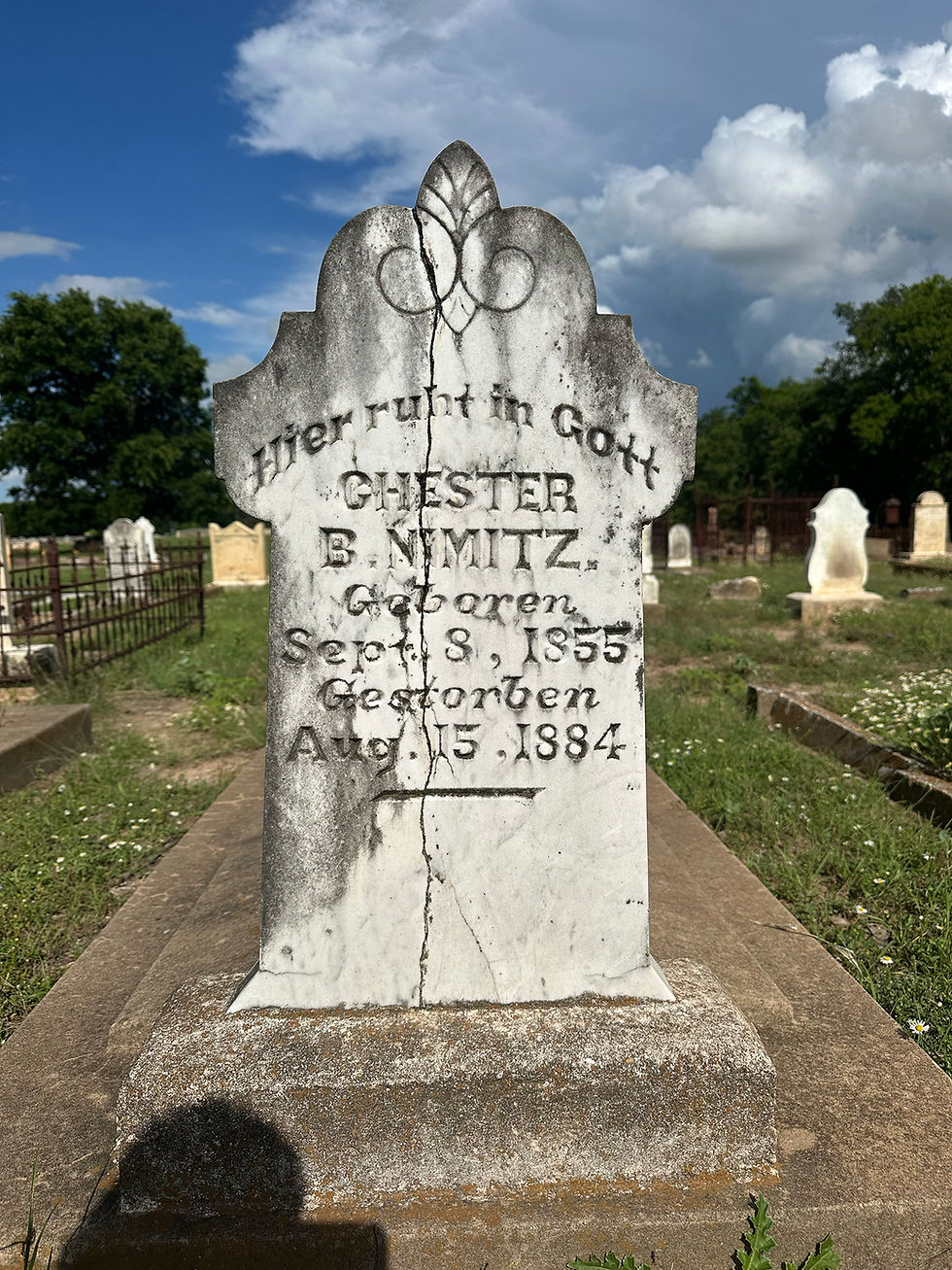

The father and grandparents of Fleet Admiral Chester W. Nimitz
Admiral Nimitz led the combined U.S. Forces to victory over Japan in WWII and signed the Instrument of Surrender on behalf of the United States.

Lieutenant Louis J. Jordan
The first Texan killed in WWI and UT football player.


State Historical Marker
June 2025 - a historic marker was dedicated to Section C recognizing the African American Community in Gillespie County

Wrought and Cast Iron Fencing
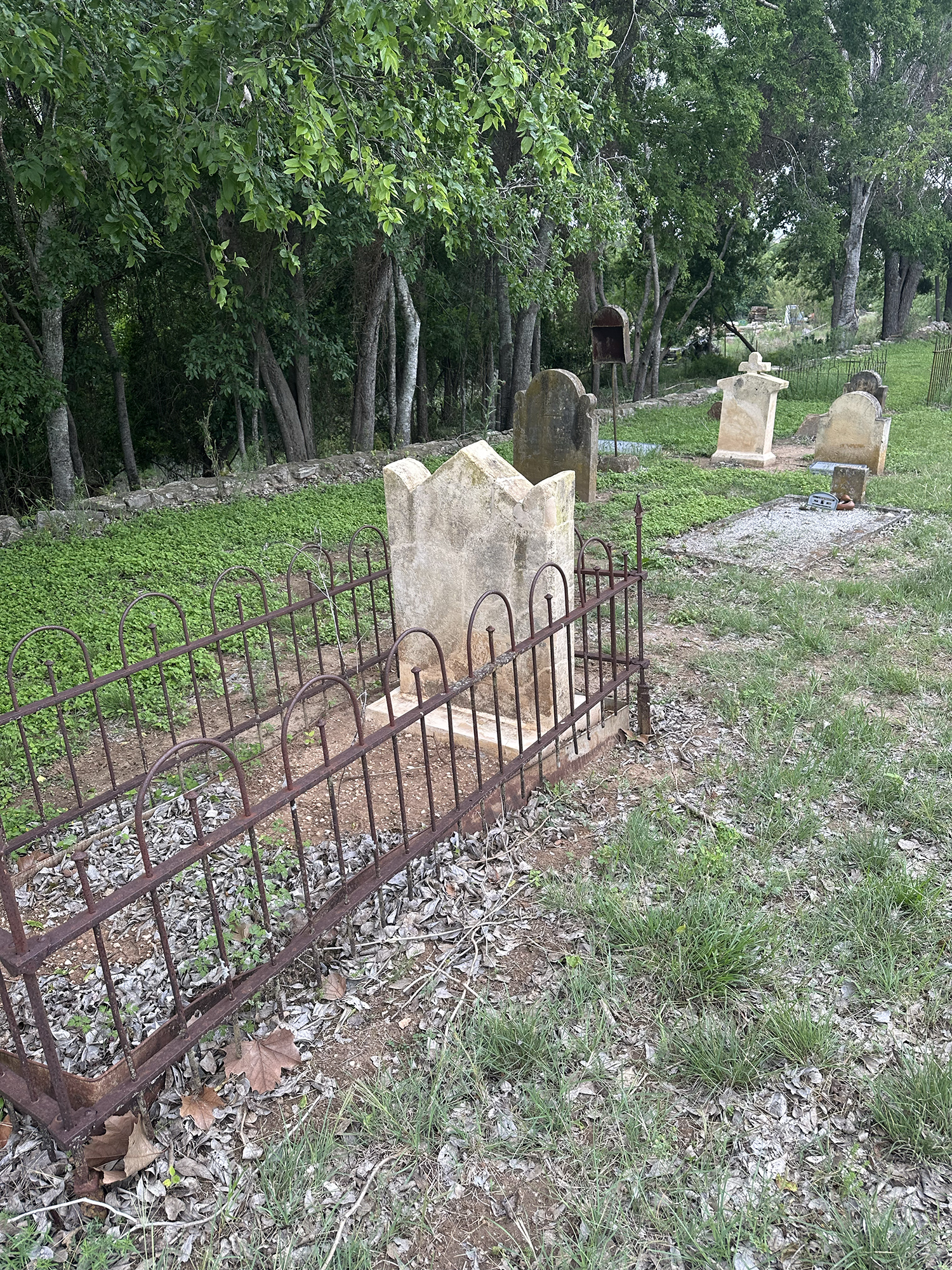
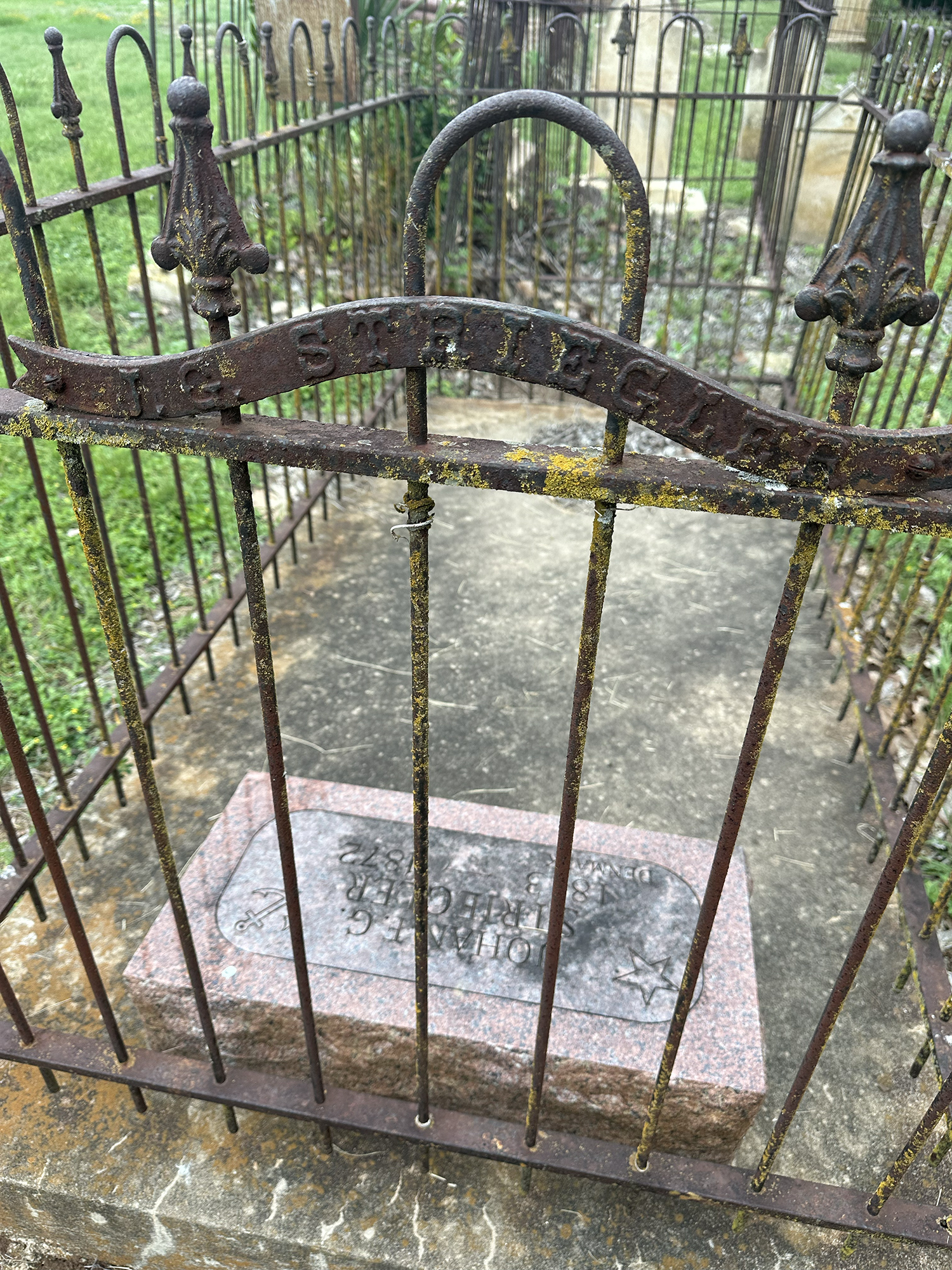
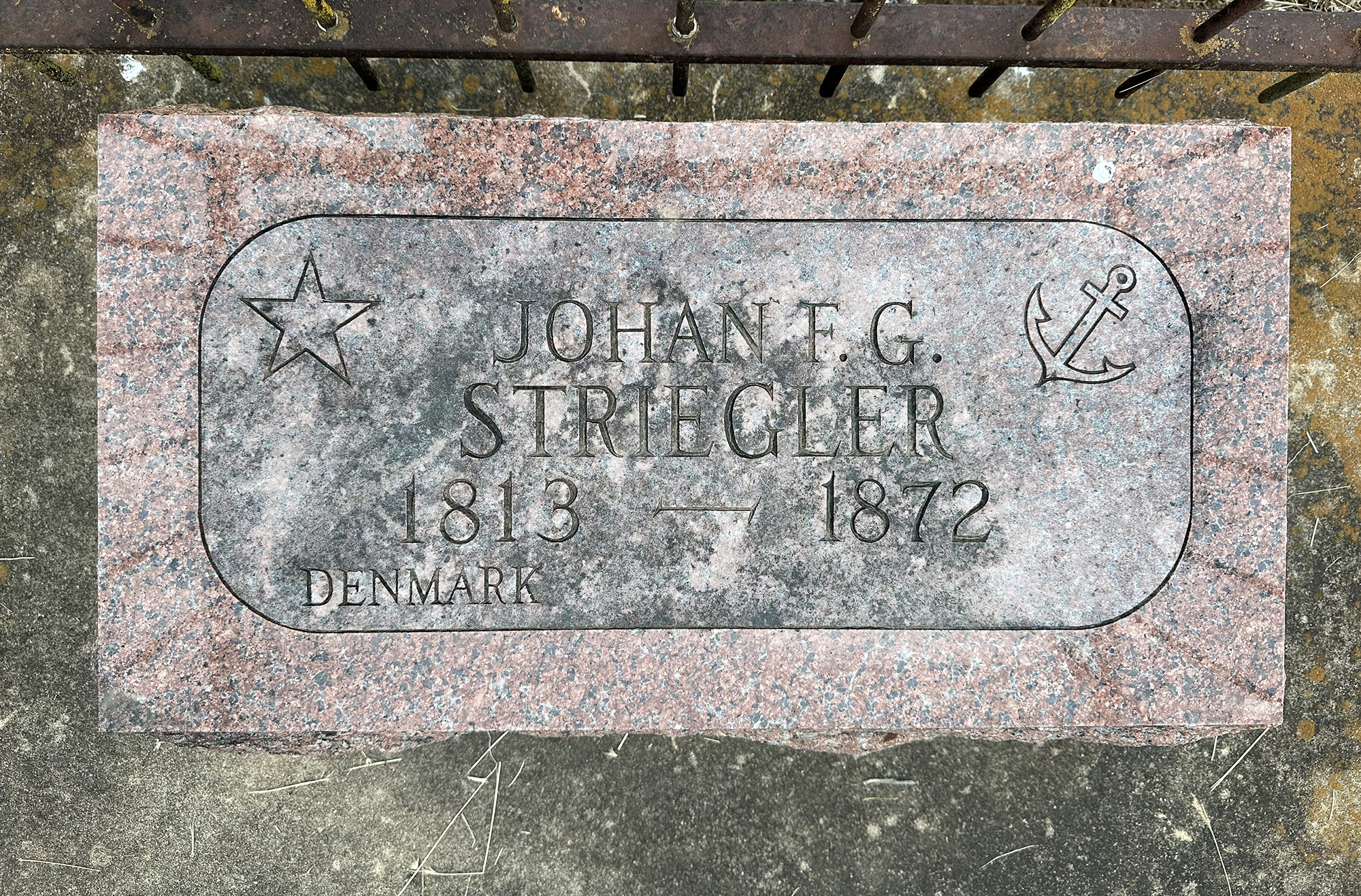
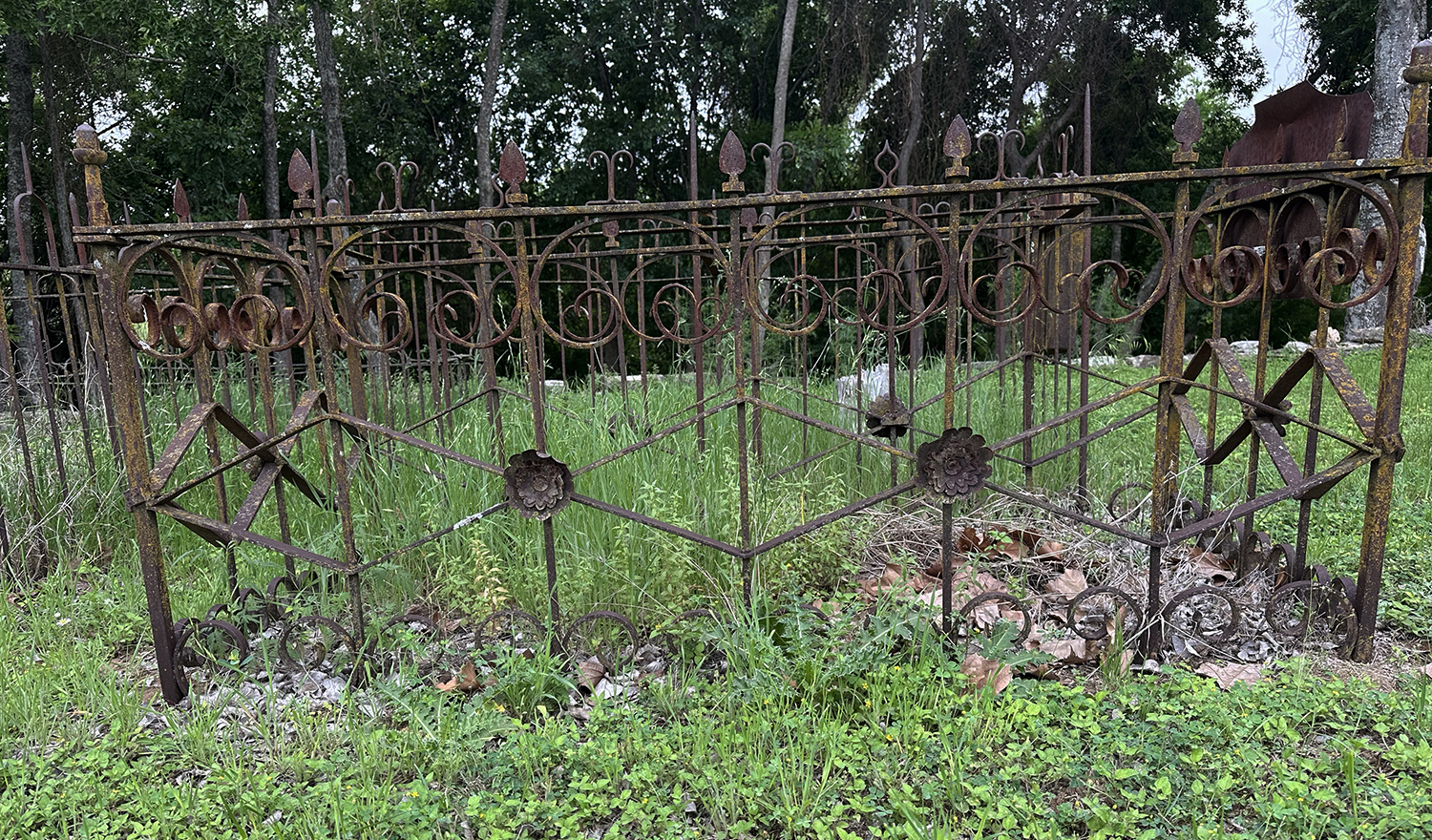
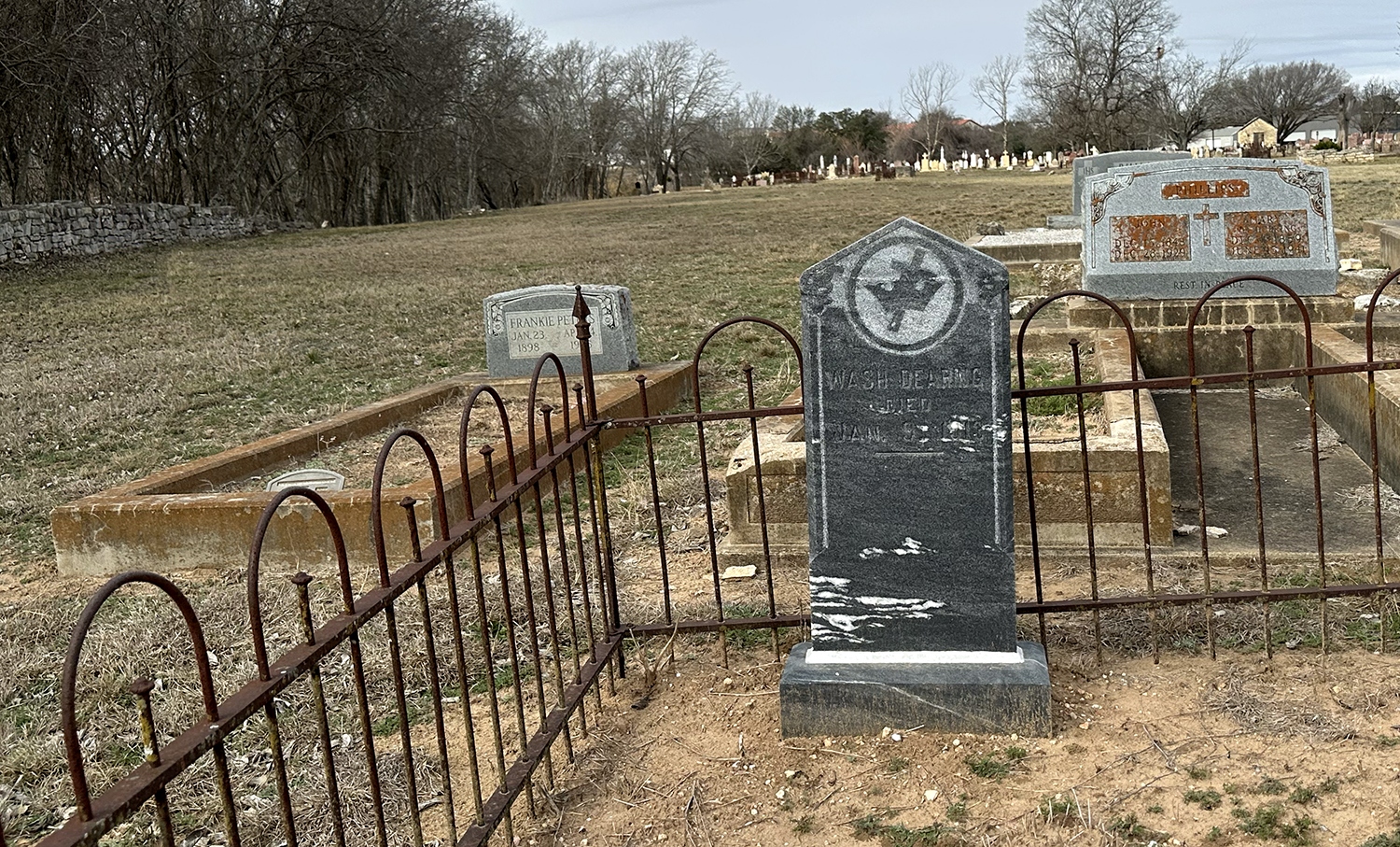
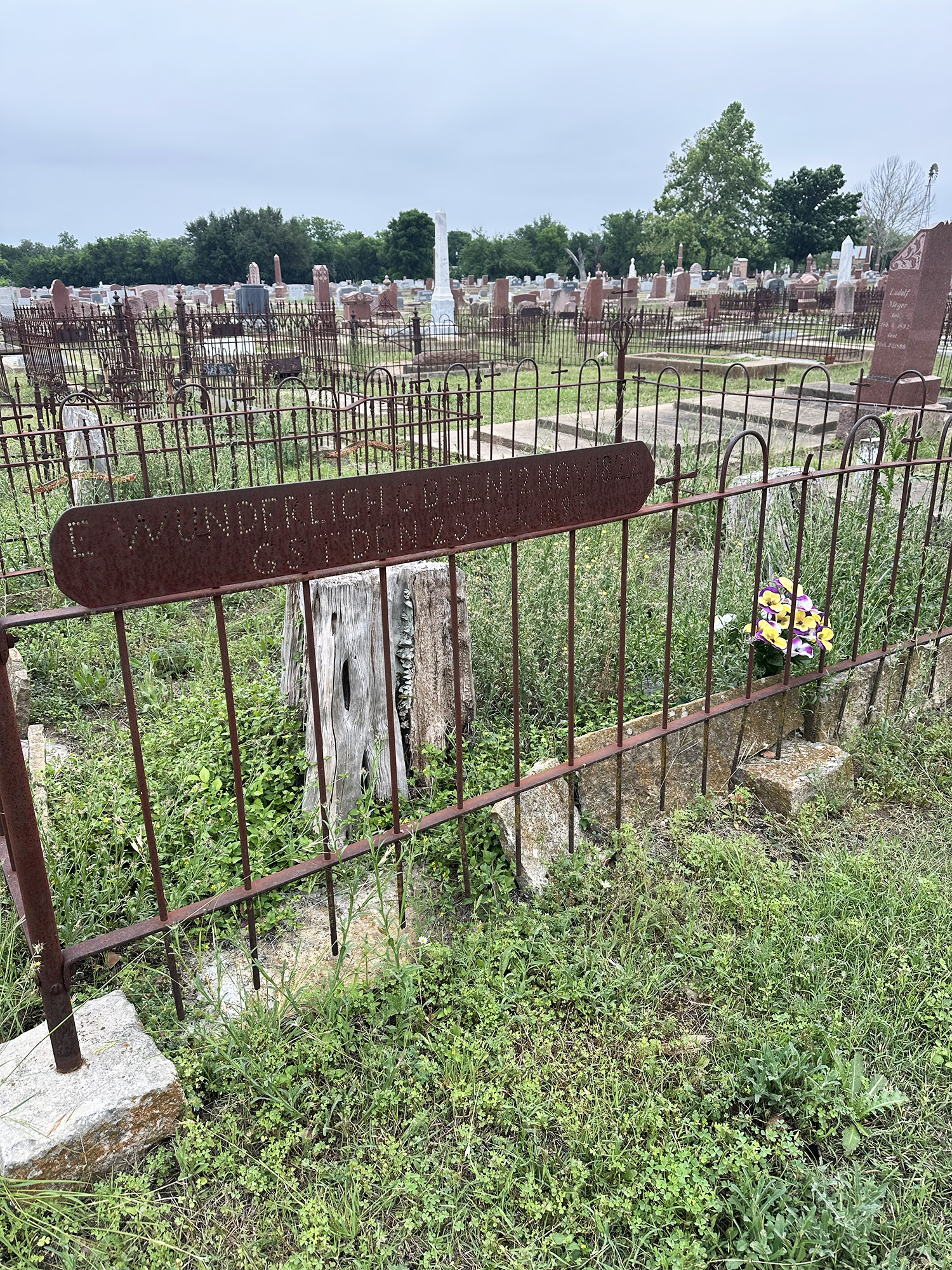
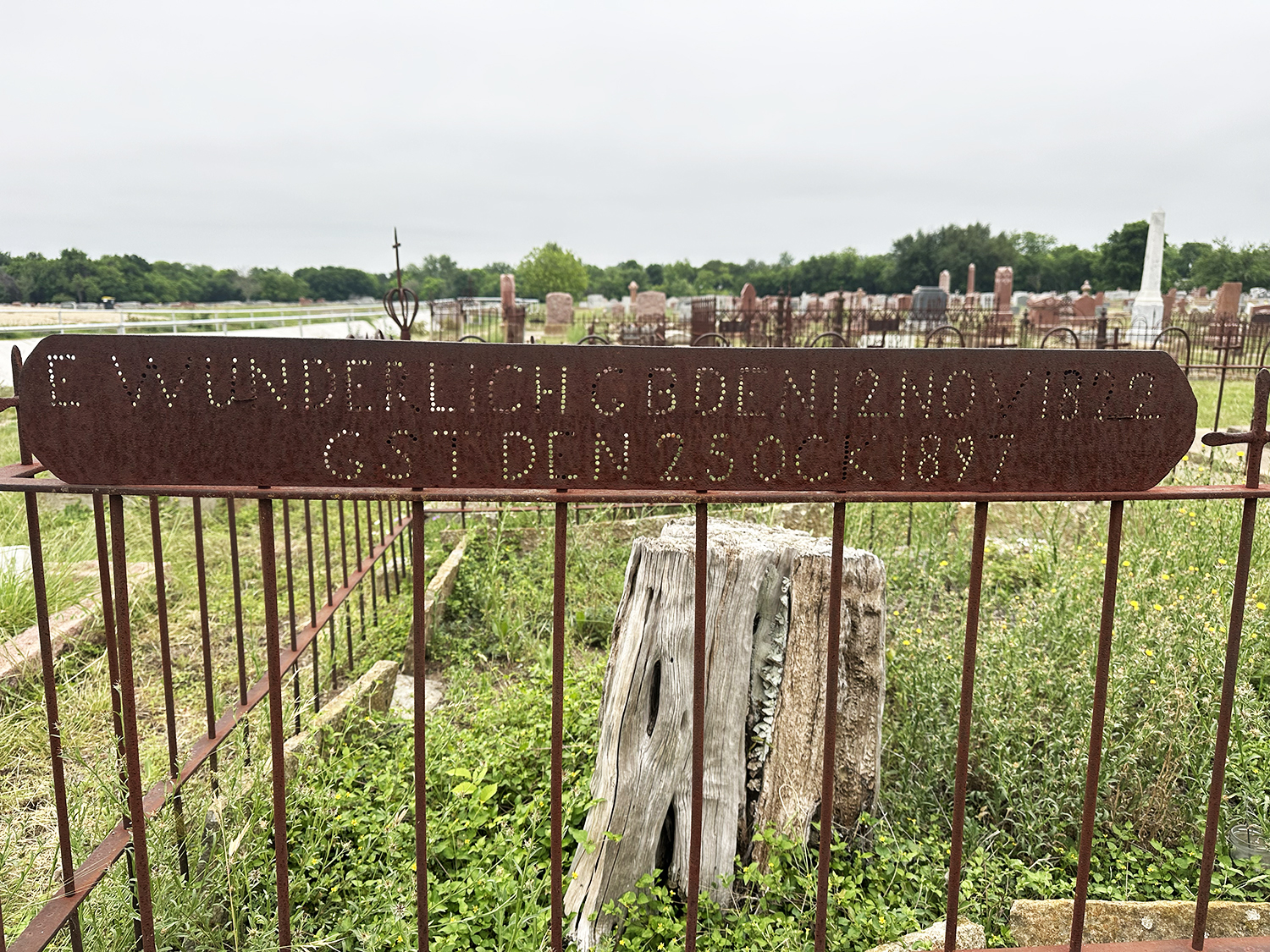
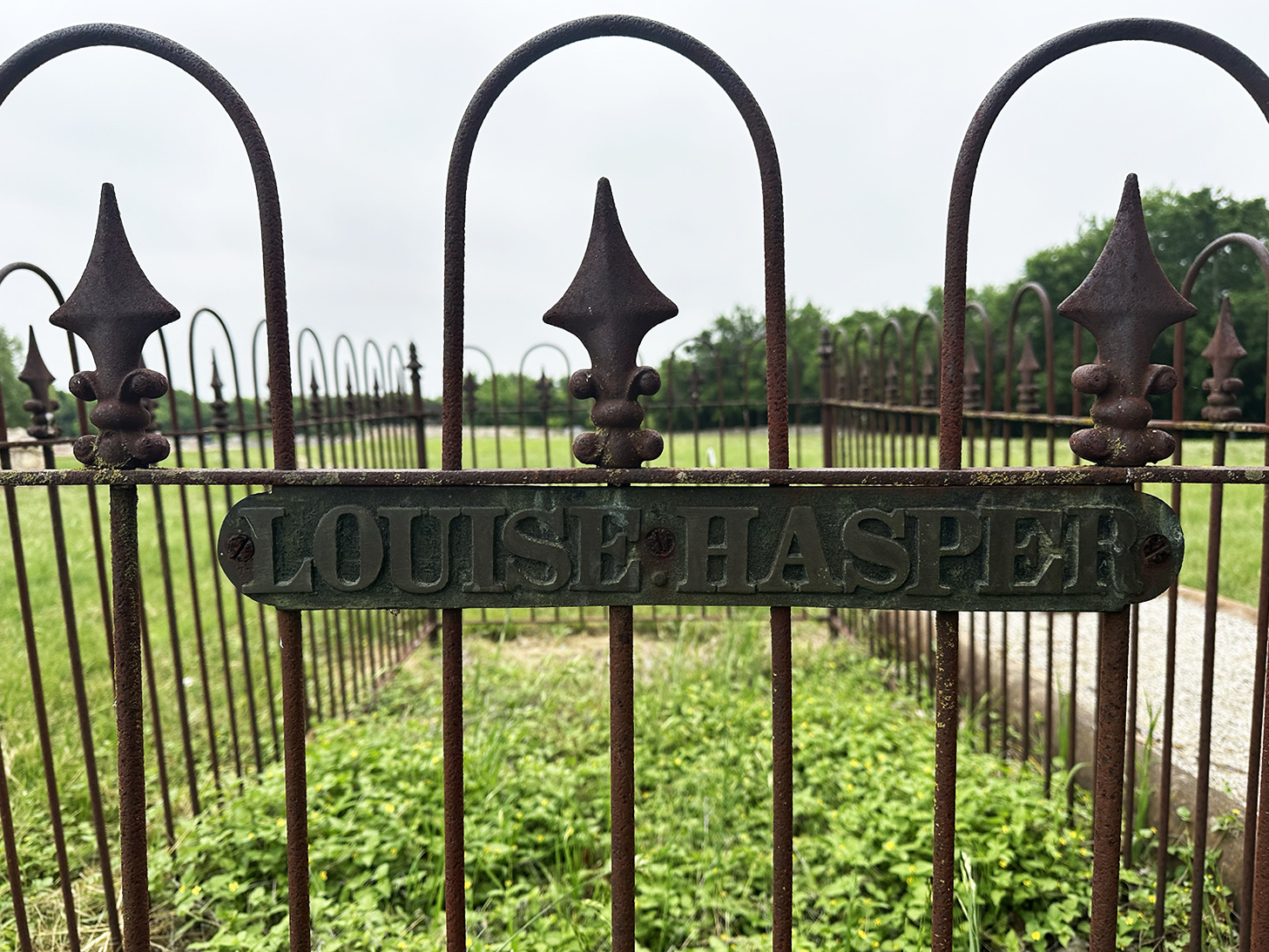
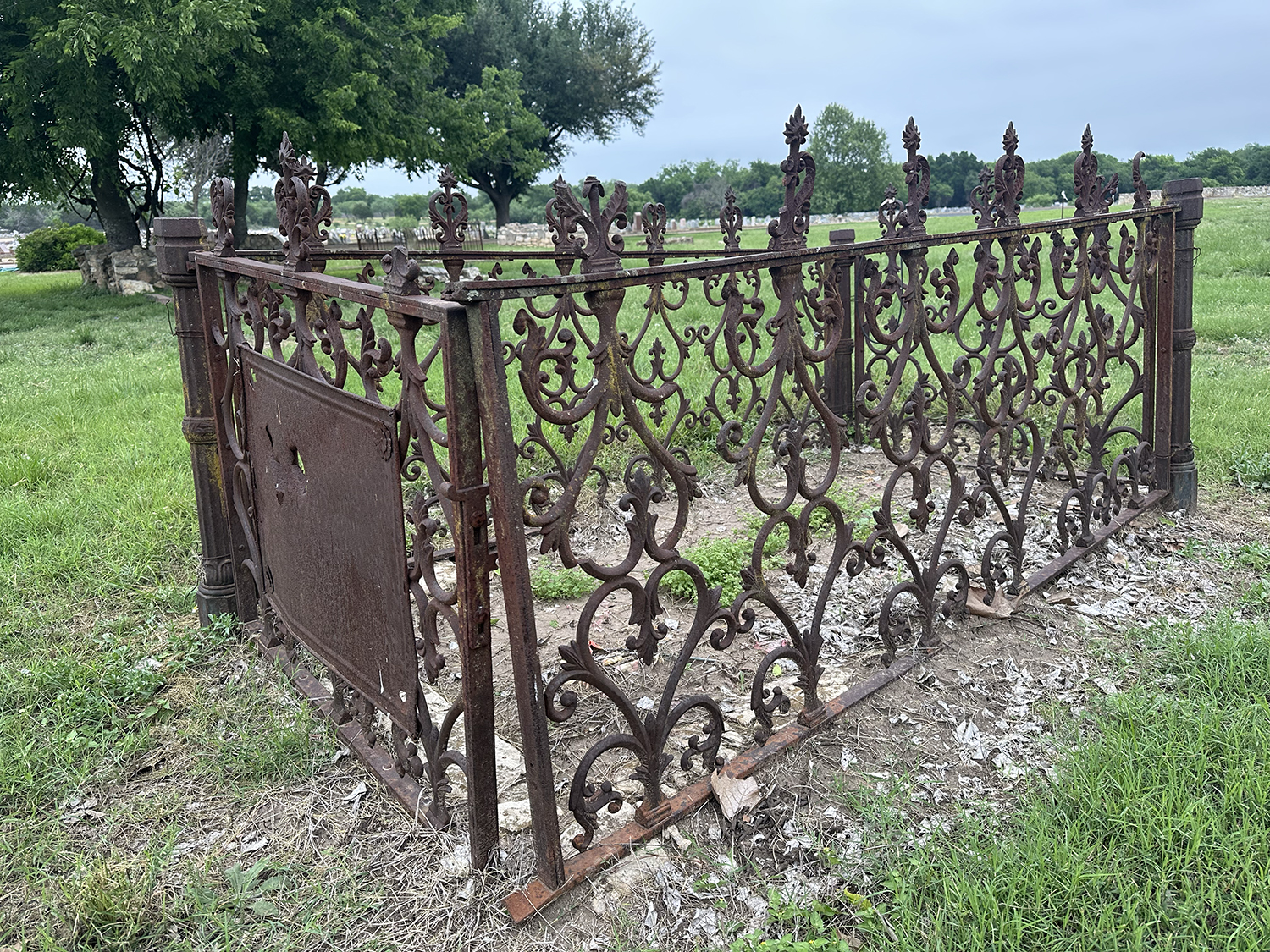
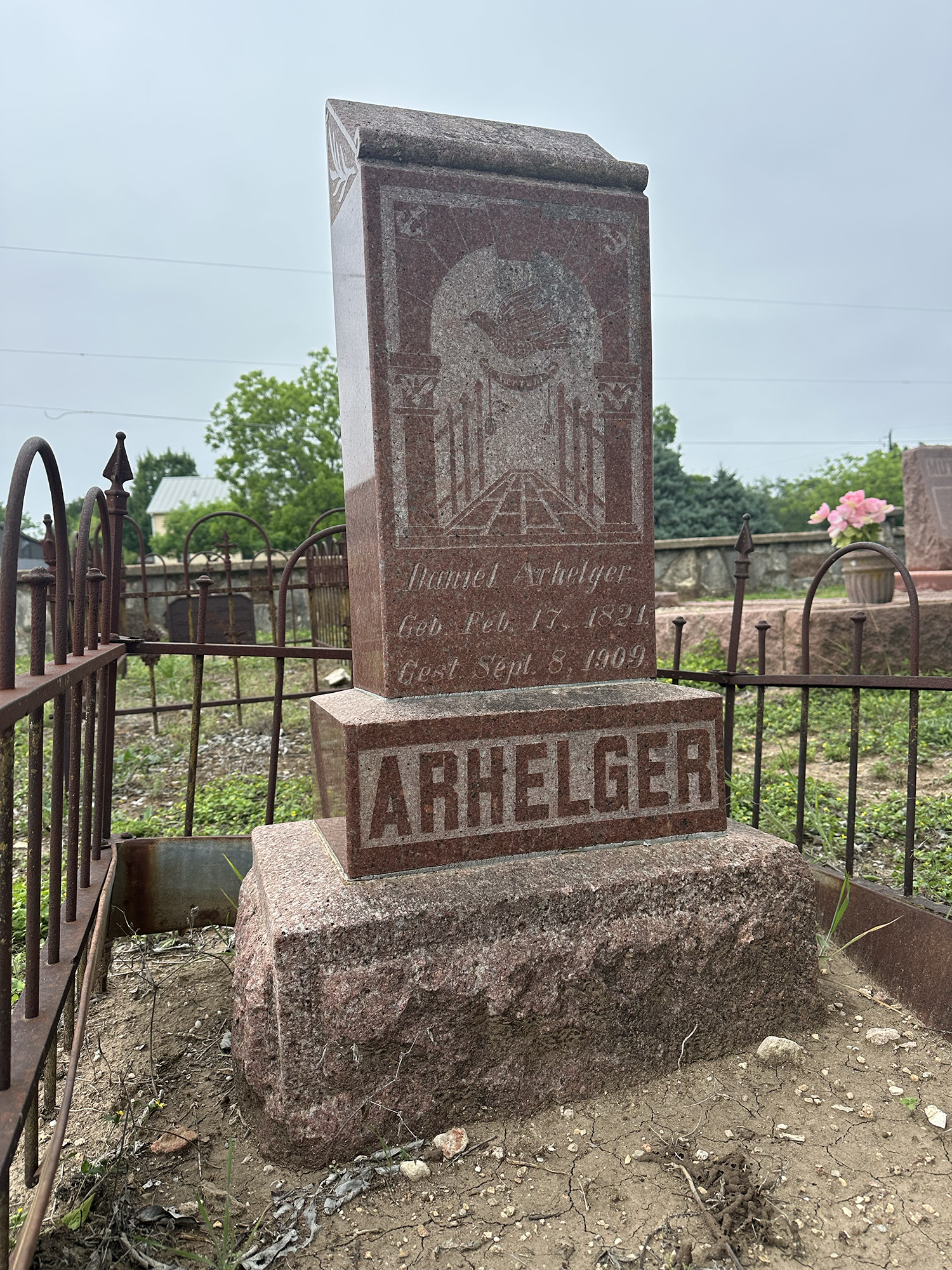
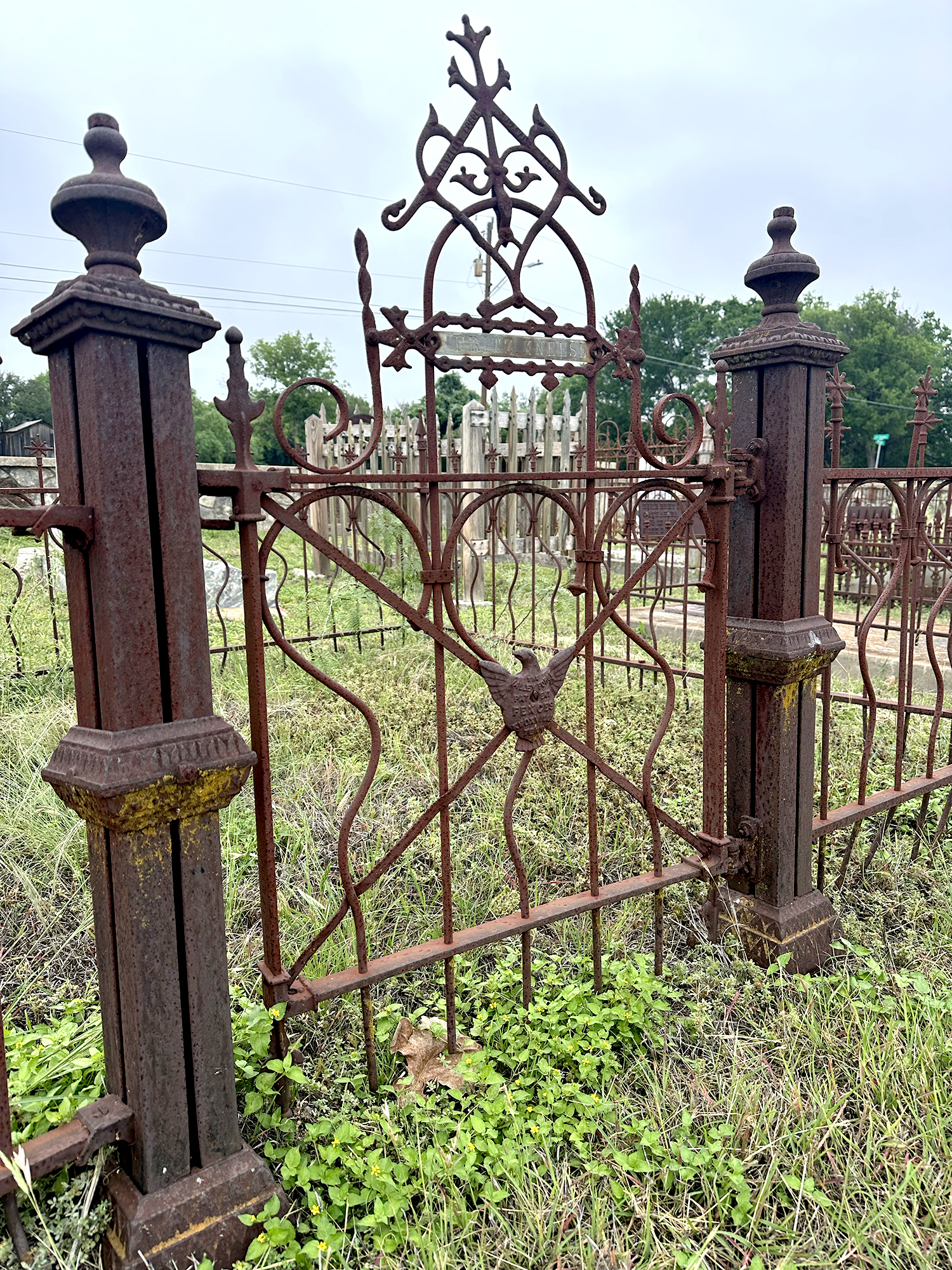
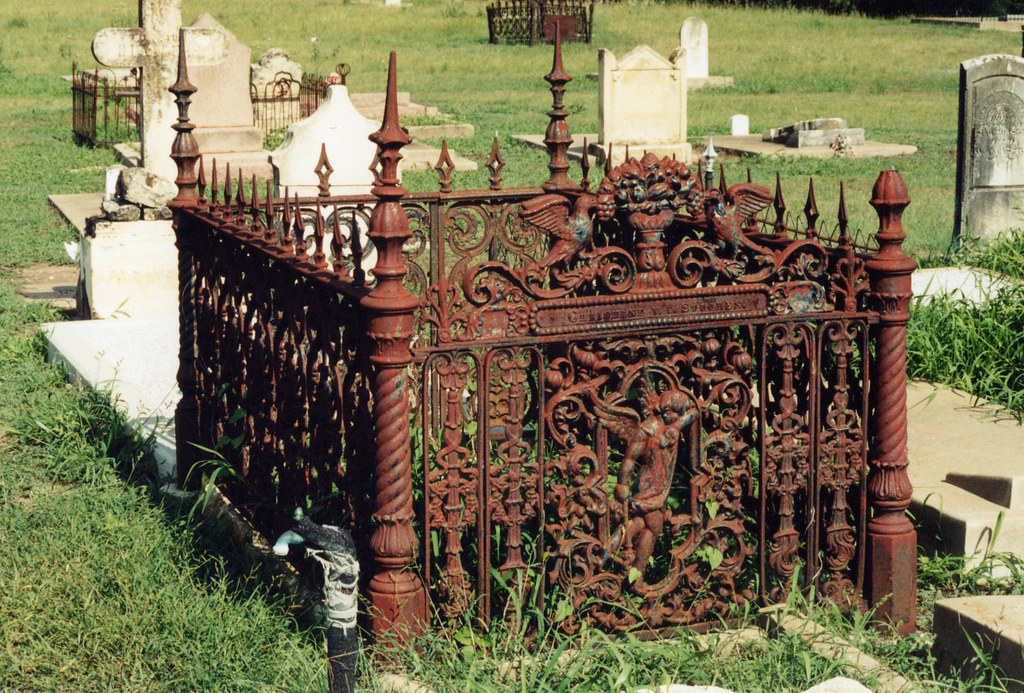
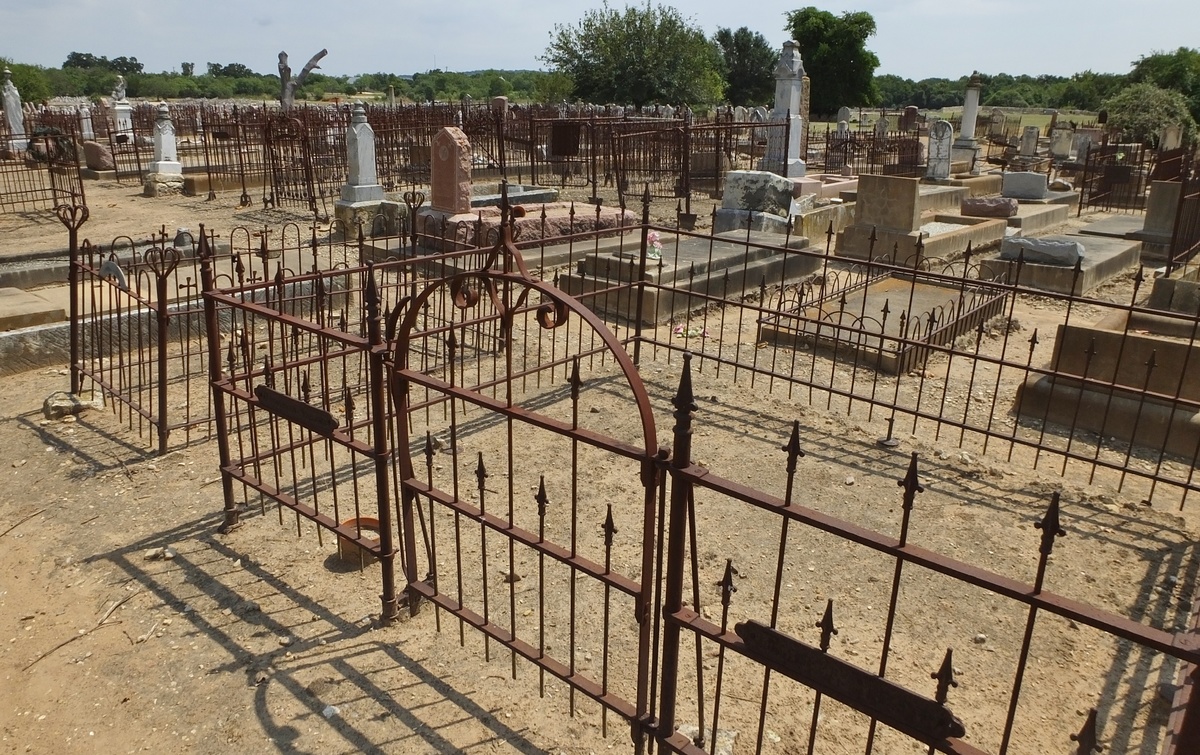
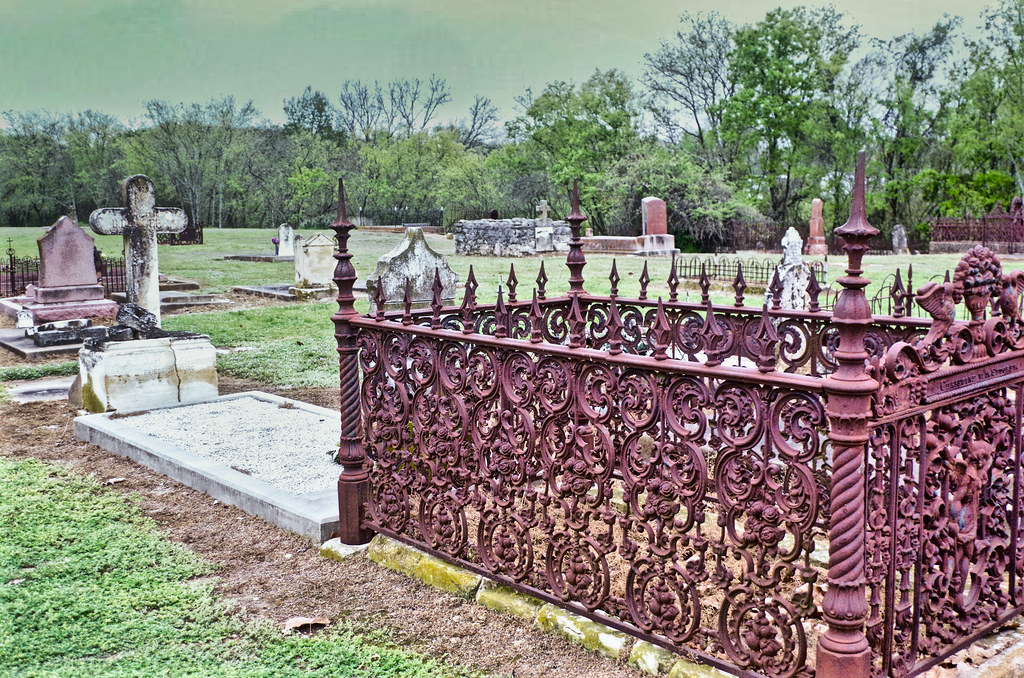
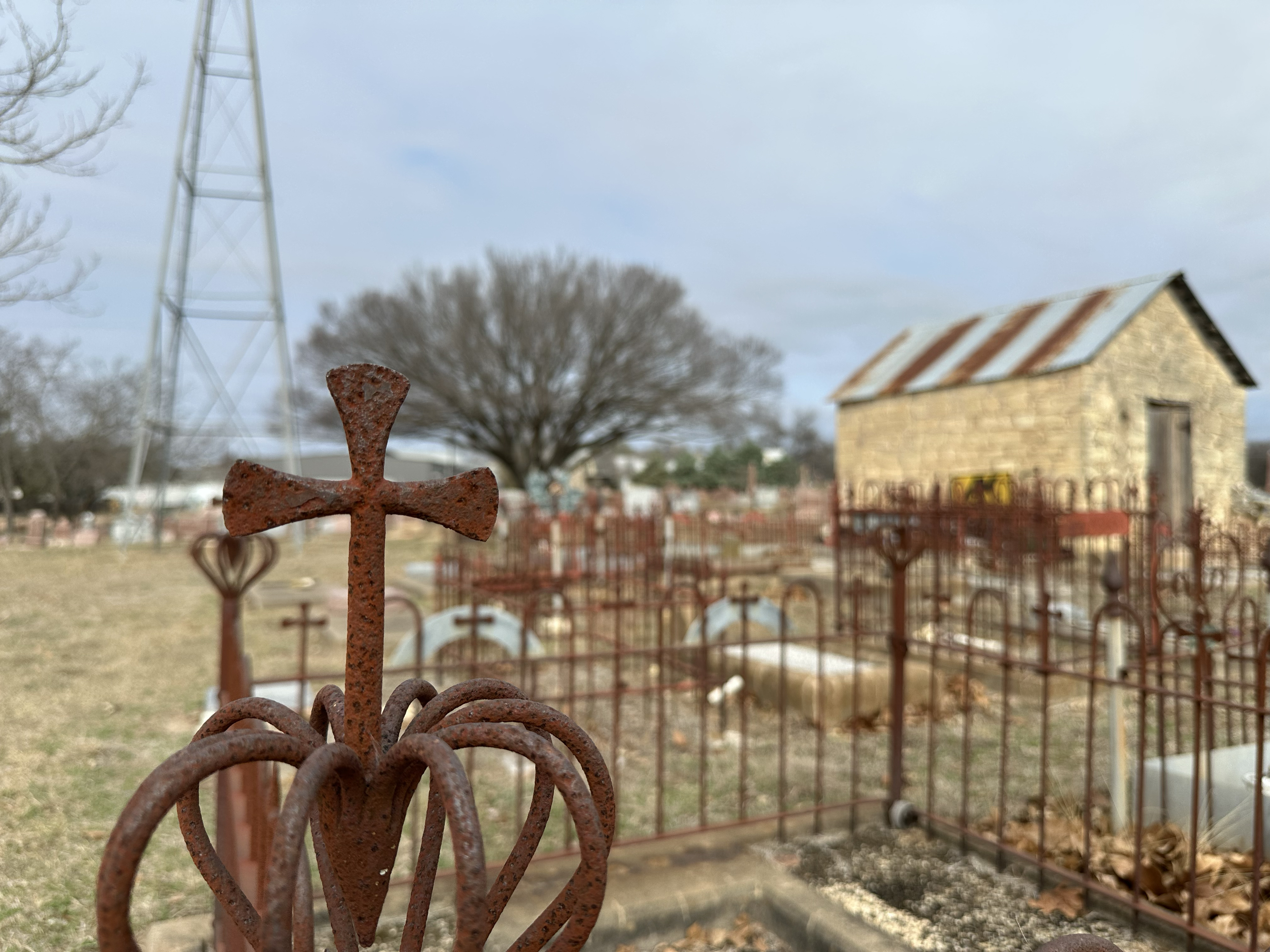
The prominent use of wrought and cast iron fencing around individual graves and family plots—such as those seen in Fredericksburg’s historic Der Stadt Friedhof—stems from a mixture of 19th-century German cultural traditions, practical frontier necessities, and Victorian-era beliefs.
1. Protection from Livestock and Wildlife (The Practical Need)
In the mid-to-late 1800's, Fredericksburg was still a developing Texas frontier town. Cemeteries were not always perfectly manicured, enclosed lawns, and free-roaming livestock, like cattle, sheep, and goats, or wild animals, such as wild hogs, could easily wander through the grounds.
The Danger: Animals could trample plots, knock over newly placed headstones, or even disturb shallow, fresh graves.
The Solution: Placing a sturdy iron boundary immediately around the gravesite provided localized protection, ensuring the physical remains of loved ones remained safe from wandering animals.
2. European and German-Texan Heritage
Fredericksburg was founded by German immigrants who brought deep-rooted traditions from Europe. In Germany, the tradition of utilizing metalwork—specifically wrought iron crosses and boundaries (Einfriedung)—was highly popular.
German-Texans were enthusiastic buyers of ornate cast and wrought iron. Many families bought iron sections from talented local blacksmiths in the Hill Country to craft custom plot borders.
3. Claiming and Defining Family Plots
Before modern cemetery corporations strictly managed landscaping and plot mappings, buying a cemetery plot meant you were buying a piece of land that your family was personally responsible for maintaining.
A fence cleanly demarcated the exact boundaries of a family’s purchased “hallowed ground.”
It prevented neighboring graves from encroaching on their space and created a dedicated, private area where family members could step inside to plant flowers, weed the plot, or sit in reflection.
4. Victorian Spiritualism and Comfort for the Living
During the Victorian era, the perception of death shifted from a cold, clinical end to a “peaceful sleep.” Cemeteries were redesigned to look like public parks or “rural gardens” where families would picnic and visit.
Symbolism of the Cradle: Rectangular iron fences closely resembled a crib or cradle, symbolizing that their loved one was tucked safely away in a bed rather than just left in the dark earth.
The Arrow/Spear Finials: The sharp, upward-pointing tips, or finials, on the fence posts were not just decorative; they carried a Victorian double meaning. Physically, they deterred human intruders or ghouls from entering, while spiritually, the arrows pointed toward heaven.



Grave Box
This beautiful, remarkably well-preserved example of a Grabkranz (grave wreath) is displayed inside a protective Totenkranzkasten (death wreath box) or Grabkasten (grave box).
This poignant tradition was brought directly to Fredericksburg by German immigrants and was highly popular from the late 19th century through the early 20th century.
They were often crafted by local blacksmiths or sheet-metal workers, also known as tinsmiths, in the Texas Hill Country.

A Cultural Trend of the Era
While common in Germany and France, where they are called immortelles, this practice faded out around World War I.
Because of anti-German sentiment during the war and the rising popularity of modern, commercialized funeral practices, families stopped placing them.
Over the last century, many of these glass boxes in Texas cemeteries have been broken by lawnmowers, damaged by hail, or stolen by antique collectors.
Finding one with the glass intact and the colorful ceramic or metal flowers still vibrant inside, like the one shown, is incredibly rare and a true historic treasure.